
Book Nuggets - That Hideous Strength
Ten thoughts about a favorite book

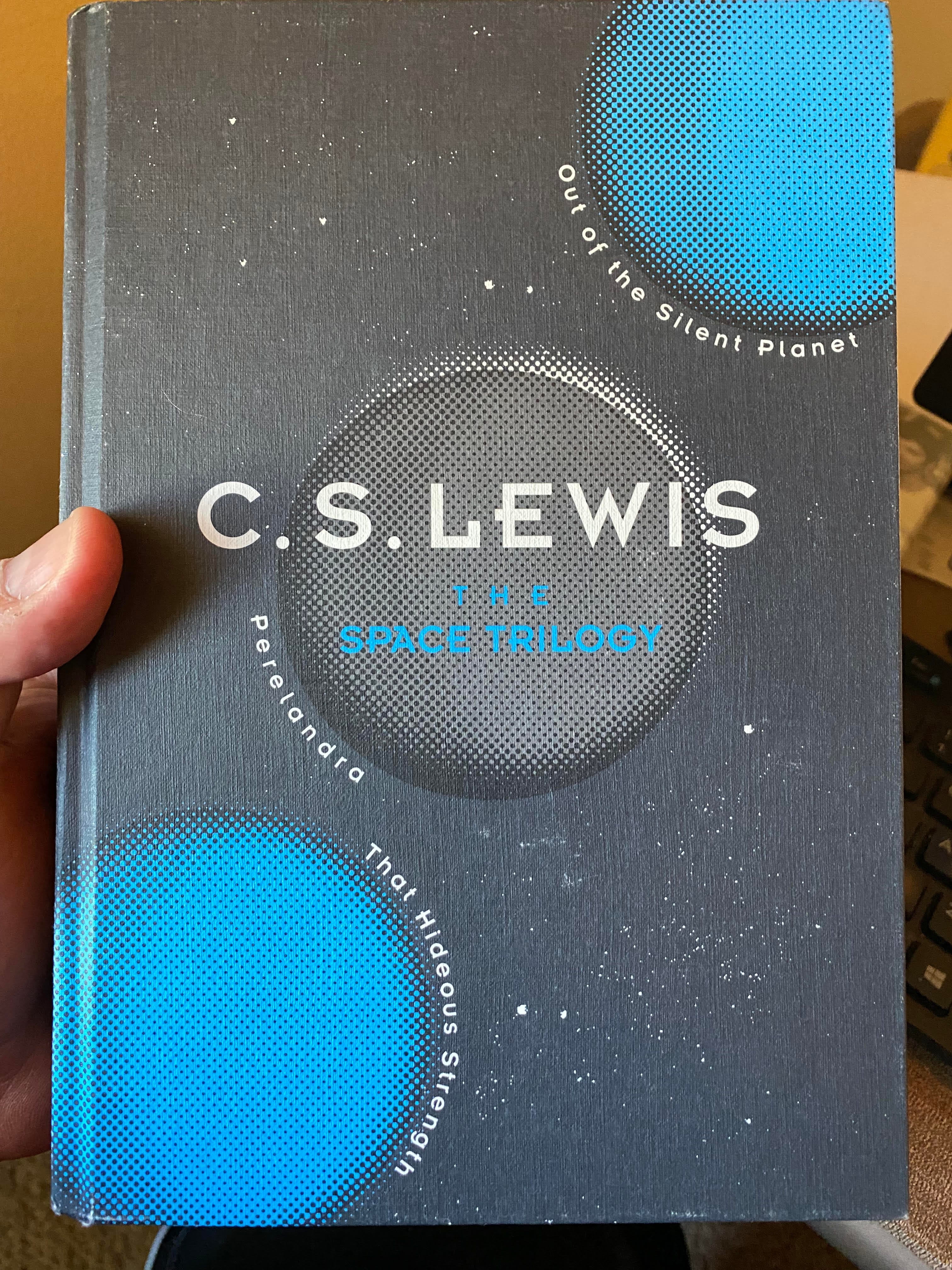
(1) In his book Spenser’s Images of Life, C.S. Lewis posits the idea that the best stories have their own “Donegality”—a certain ambiance that makes the reader want to return to them repeatedly.1 The ragtag Donegality of St. Anne's-on-the-Hill is rich with comradeship and love. It draws the reader back time and again. The love of Ivy Maggs for Mr. Bultitude and for her jailed husband, Mr. Bultitude’s love for Ivy Maggs, the Dimbles for one another, the love of McPhee, Grace Ironwood, and Jane Studdock for Professor Ransom, and Ransom’s love for them all.
(2) The idea of the “inner ring” is fleshed out marvelously with Mark Studdock at Bracton College/N.I.C.E. and his wife Jane at St. Anne’s. Some “inner rings” are worth getting into while others must be avoided at all costs. Mark so badly wants into the inner ring of the progressive element that he will live a life of lies and treachery to be part of the evil brewing at the National Institute of Coordinated Experiments (N.I.C.E.) Jane wants nothing to do with the people at St. Anne’s. She wants to continue her independent life despite the fact that the people at St. Anne’s (especially Professor Ransom) can help free her from her nightmares and save her life. Mark needs to flee from his desired inner ring and Jane needs to flee toward hers.2 If Mark and Jane both act as they should, they will end up back with each other and enter an inner ring that they have both heretofore avoided—the inner ring shared by one man and one woman in an attentive, loving, happy marriage.
(3) The past two years have proven how prescient Lewis was about the limitations of science and the government’s desire to bend science toward wicked ends. For example, consider the Head, which is an actual decapitated head that belonged to Alcasan, a French scientist executed for murder. The scientists at the N.I.C.E. believe the Head is being kept alive by advanced technology and that it is truly Alcasan, who is being “rehabilitated.” In reality, Alcasan’s severed head has become nothing more than a means by which the Macrobes (a.k.a. demons) are attempting to dupe scientists to aid them in taking over the world.
(4) John Wither (the Deputy Director of the N.I.C.E. and servant of the Head) is a horrifying character but in a most uncommon way. He never sleeps but instead walks around in a semi-awake, emotionless state as another tool of the Macrobes. He bears an eerie resemblance to the modern HR director who talks only in impenetrable bureaucratic gibberish.
(4) Where does one begin with “Fairy” Hardcastle? On second thought, perhaps the less said about the Fairy, the better. If you know about her, then you know.
(5) The opening sentence of Tolkien’s The Hobbit comes in for heavy praise. As well it should. It is glorious. “In a hole in the ground there lived a hobbit. Not a nasty, dirty, wet hole, filled with the ends of worms and an oozy smell, nor yet a dry, bare, sandy hole with nothing in it to sit down on or to eat: it was a hobbit-hole, and that means comfort.” But the opening sentence of That Hideous Strength is also glorious in how it sets the tone for all that follows in the book. “‘Matrimony was ordained, thirdly,’ Jane Studdock said to herself, ‘for the mutual society, help, and comfort that one ought to have of the other.’ She had not been to church since her schoodays until she went there six months ago to be married, and the words of the service had stuck in her mind.”3
(6) The apostate Rev. Straik offers a cautionary tale—not only to pastors but to all Christians who would hold fast to the faith that was once for all delivered to the saints.
“Do not imagine," said Mr Straik, “that I indulge in any dreams of carrying out our programme without violence. There will be resistance. They will gnaw their tongues and not repent. We are not to be deterred. We face these disorders with a firmness which will lead traducers to say that we have desired them. Let them say so. In a sense we have. It is no part of our witness to preserve that organisation of ordered sin which is called Society. To that organisation the message which we have to deliver is a message of absolute despair.”
“Now that is what I meant,” said Mark, “when I said that your point of view and mine must, in the long run, be incompatible. The preservation, which involves the thorough planning, of society is just precisely the end I have in view. I do not think there is or can be any other end. The problem is quite different for you because you look forward to something else, something better than human society, in some other world.”
“With every thought and vibration of my heart, with every drop of my blood,” said Mr Straik, “I repudiate that damnable doctrine. That is exactly the subterfuge by which the World, the organisation and body of Death, has sidetracked and emasculated the teaching of Jesus, and turned into priestcraft and mysticism the plain demand of the Lord for righteousness and judgment here and now. The Kingdom of God is to be realised here—in this world. And it will be. At the name of Jesus every knee shall bow. In that name I disassociate myself completely from all the organised religion that has yet been seen in the world.”4
(7) Dr. Filostrato is the patron saint for our present moment where germophobic bureaucrats command things “for our safety.” As Filostrato glances out the window at a full moon he says, “There is a world for you, no? There is cleanness, purity. Thousands of square miles of polished rock with not one blade of grass, not one fibre of lichen, not one grain of dust. Not even air.”5
(8) This sentence by Ranson would make a fitting epitaph for our disordered, wicked age: “They have gone to the gods who would not have come to them, and pulled down Deep Heaven on their heads.”6
(9) Once evil has been defeated and the inhabitants at St. Anne’s are reflecting on all that has happened, they are at a loss to describe how victory was achieved. This exchange between McPhee and the Director (Ransom) is worth remembering in our day and age:
[McPhee speaking] “I’d be greatly obliged if any one would tell me what we have done—always apart from feeding the pigs and raising some very decent vegetables.”
“You have done what was required of you,” said the Director. “You have obeyed and waited. It will often happen like that. As one of the modern authors has told us, the altar must often be built in one place in order that the fire from heaven may descend somewhere else.”7
(10) The final scene between Ransom and Jane is so touching. Jane has come to love and trust Ransom. He has cared for her and helped her to escape from both physical danger and from her hellish visions and nightmares. Ransom has other ideas for Jane and guides her affections toward her husband Mark. Ransom’s final words to Jane are deeply fitting, “Go in obedience and you will find love. You will have no more dreams. Have children instead. Urendi Maleldil.”8 The opening words of the book about marriage have found their conclusion. What was lacking between Mark and Jane will now be made whole.
—
You can order your own copy of That Hideous Strength from the best bookstore in the world (and located in my hometown no less), Eighth Day Books. Here is the link.
C.S. Lewis, Spenser’s Images of Life (Cambridge, UK: Cambridge University Press, 1967), 115. See also Michael Ward, Planet Narnia: The Seven Heavens in the Imagination of C. S. Lewis (???) and Christiana Hale, Deeper Heaven: A Reader's Guide to C. S. Lewis's Ransom Trilogy
I am indebted to Douglas Wilson for developing this last point.
Page 349. The pagination in these footnotes is from my personal copy, the 75th Anniversary all-in-one edition.
Page 415.
Page 511.
Page 629.
Page 706.
Page 716.