
Music by Titans - Woefully Arrayed
Exploring truth, beauty, and goodness within the world of classical music

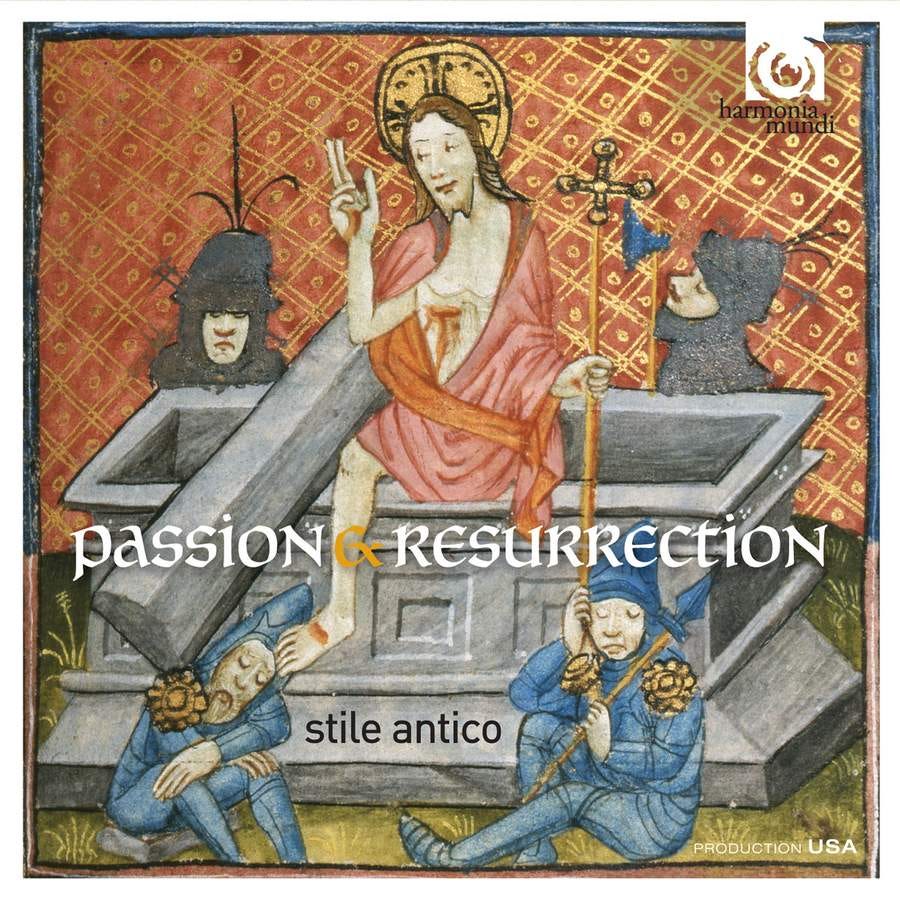
This week’s piece comes to us via the pen of William Cornysh (1465-1523) and his setting of the poem “Woefully Arrayed.” The poem is attributed to John Skelton.
Matthew O’Donovan gives this background of Cornysh and his setting of “Woefully Arrayed”:
One of the leading English composers around the turn of the sixteenth century was William Cornysh, some of whose church music is preserved in the Eton Choirbook. Woefully arrayed, however, is not church music, but rather a devotional “carol” intended for domestic performance, and as such is more economical in the word-setting, simpler in texture and less ornate than Cornysh’s large-scale antiphons. What is striking, however, is the care shown in the conveying the text; although textural engagement has by no means reached baroque levels of sophistication, this piece is laden with affective gestures to convey its meaning, while occasional phrases receive particularly vivid word-painting (such as the alternating back and forth between two chords on the words “tugged to and fro”).1
Here is the text from Skelton’s poem that Cornysh set to music:
Woefully arrayed,
My blood, man,
For thee ran,
It may not be naide; [denied]
My body pale and wan,
Woefully arrayed.Behold me, I pray thee, with all thy whole reason,
And be not hard-hearted for this encheson, [cause]
That I for thy soul's sake was slain in good season,
Beguiled and betrayed by Judas' false treason;
Unkindly treated,
With sharp cords sore fretid, [stung]
The Jews me thretid, [threatened]
They mocked, they grinned, they scorned me,
Condemned to death, as thou mayst see,
Woefully arrayed.Thus naked am I nailed, O man, for thy sake!
I love thee, then love me; why sleepst thou? awake!
Remember my tender heart-root for thee brake,
With pains my veins constrained to crake;
Thus tugged to and fro,
Thus wrapped all in woe,
As never man was so,
Treated thus in most cruel wise,
Was like a lamb offered in sacrifice,
Woefully arrayed.Of sharp thorn I have worn a crown on my head,
So pained, so strained, so rueful, so red;
Thus bobbed, thus robbed, thus for thy love dead,
Unfeigned, not denying my blod for to shed;
My feet and hands sore
The sturdy nails bore;
What might I suffer more
Than I have done, O man, for thee?
Come when thou wilt, welcome to me,
Woefully arrayed.
This piece is well worth considering as we draw nearer to Good Friday and Easter Sunday.
Spotify | Apple Music | YouTube
—
Classical music is not meant primarily to aid relaxation, studying, or mental focus, although it can do all of those things. It “works” best when an attentive listener gives their undivided attention to the work and “surrenders” to what the composer is trying to convey in sound. Attentive listening goes beyond listening for a pleasing tune or relaxing melody. It goes further up and further in to discover things like harmony, counterpoint, orchestration, text painting, tension, release, and so many other fine details.
Each Monday I will suggest a piece to which observant listeners can attend for the next seven days. Just like other masterpieces, great works of classical music do not give up their secrets easily. Whenever possible, one should give a couple of listens to each week’s piece.
The close resemblance of the title of this series and to the title of the Books of Titans blog and podcast is entirely intentional.
Matthew O’Donovan, Stile Antico, in accompanying booklet, Passion & Resurrection: Music Inspired by Holy Week.